
The HYROX rowing station is a 1,000m row on a Concept2 rowing machine. It's the fifth of eight workout stations, and by the time you reach it, you'll already have run 5km and completed four demanding exercises.
But could rowing be one of the most overlooked opportunities to improve your HYROX performance?
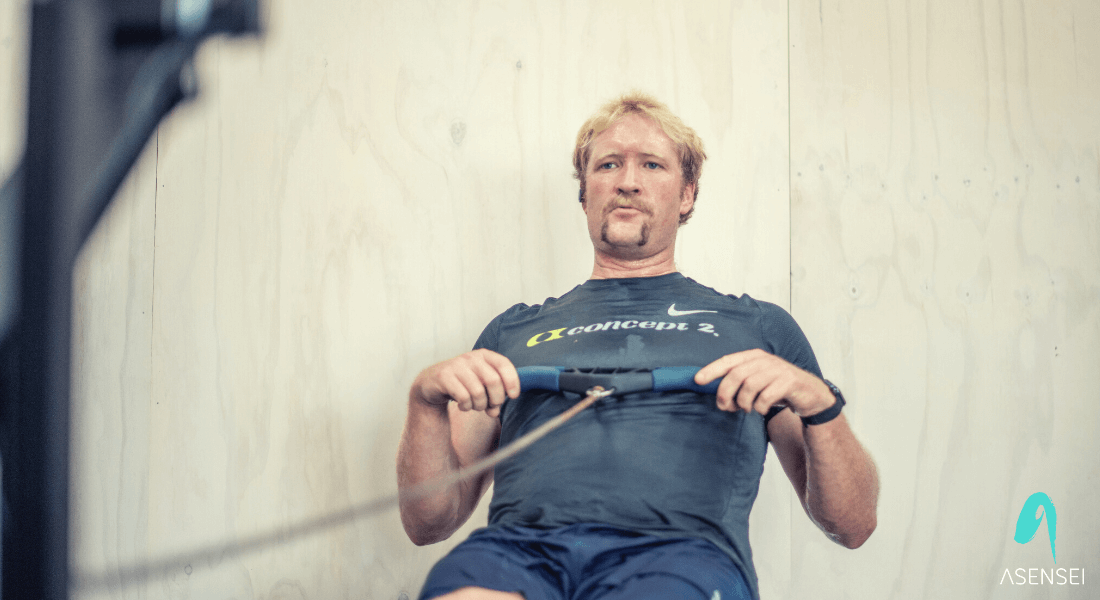
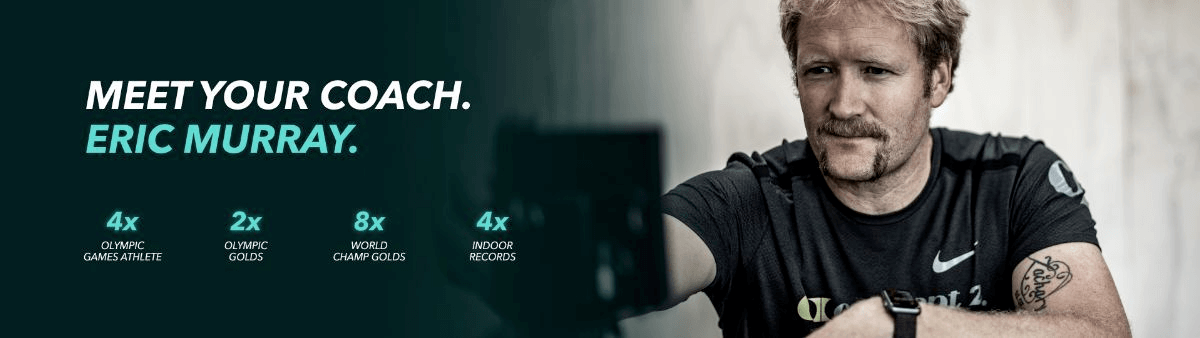
Recent research suggests that there may be untapped potential in the rowing station. And according to two-time Olympic rowing champion and asensei coach Eric Murray, many HYROX athletes already have the strength and fitness to row faster – they just need to learn how to use the rowing machine more effectively.
In this guide to HYROX rowing, we'll look at race distances, typical rowing times, machine settings, technique and pacing. We'll share Eric's coaching advice and some practical rowing workouts to help you prepare for your next HYROX race.
Table of Contents
- What is the HYROX rowing distance?
- Is rowing overlooked in HYROX?
- What rowing machine is used in HYROX?
- HYROX rowing machine resistance and damper settings
- What is a good HYROX rowing time?
- How hard should you row in HYROX?
- Eight HYROX rowing technique tips from an Olympic champion
- 1. Maintain momentum rather than starting again with every stroke
- Eric Murray on rowing efficiency in HYROX
- 2. Use your legs and keep your arms long
- 3. Make the most of the recovery
- 4. Find the right stroke rate for HYROX
- 5. Slow down to speed up
- 6. Relax your grip and shoulders
- 7. Use the Concept2 force curve to check your technique
- 8. Don't sprint the first 200m
- How to train for HYROX rowing
- Three HYROX rowing workouts to try
- Improve your HYROX rowing with asensei
- Frequently asked questions about HYROX rowing
- How far do you row in HYROX?
- How far do you row in HYROX Doubles?
- What rowing machine is used in HYROX?
- What is a good HYROX rowing time?
- What resistance is the HYROX rowing machine set to?
- What is the best damper setting for HYROX rowing?
- What is a good stroke rate for HYROX rowing?
- Should I row as hard as possible in HYROX?
- Can you stop rowing during HYROX?
- How often should I row when training for HYROX?
- Can I train for HYROX rowing at home?
- Can I use asensei to train for HYROX?
- Conclusion: Train smarter and row faster in HYROX
- Download asensei rowing today
What is the HYROX rowing distance?
The HYROX rowing distance is 1,000 meters for both Open and Pro competitors, regardless of gender.
In HYROX Doubles, you and your partner share the 1,000m distance.
While 1,000m might not sound like a particularly long row, it's a very different challenge when you've already been running, pushing and pulling sleds and performing burpee broad jumps.
And remember, you've still got plenty of work to do afterwards!
HYROX race distances, exercises and repetitions
A HYROX race consists of eight 1km runs, each followed by a functional fitness workout station.
| Station | Exercise | Distance or reps |
|---|---|---|
| 1 | SkiErg | 1,000m |
| 2 | Sled push | 50m |
| 3 | Sled pull | 50m |
| 4 | Burpee broad jumps | 80m |
| 5 | Rowing | 1,000m |
| 6 | Farmers carry | 200m |
| 7 | Sandbag lunges | 100m |
| 8 | Wall balls | 100 reps |
That's 8km of running in addition to the eight workout stations. The weights used for some exercises vary depending on your race division.
For more information, check the official HYROX rulebooks.
Is rowing overlooked in HYROX?
Running understandably gets a lot of attention in HYROX training, but recent research suggests that athletes shouldn't overlook the rowing station.
A 2026 study published in Frontiers in Physiology analyzed almost 40,000 HYROX Pro and Elite race results across seven competitive seasons.
In the men's analysis, rowing had the strongest independent association with performance across the remainder of the race. Rowing was also among the strongest predictors in the women's analysis.
Interestingly, while overall HYROX performances have improved over the years, improvements in rowing times have been relatively modest. The researchers suggest that technical limitations and pacing strategies could be among the contributing factors.
Could HYROX athletes be leaving valuable performance gains on the rowing machine?
It's a subject that two-time Olympic rowing champion and asensei coach Eric Murray explored with Dr. Dan Plews and Dr. Adam Storey on the ENDUROX podcast.
Eric believes that many HYROX athletes could benefit from a better understanding of rowing technique and the mechanics of the rowing machine.
The good news? These are skills you can learn without having to become any fitter or stronger.
Read the HYROX performance research published in Frontiers in Physiology.
Think beyond the rowing station
The rowing station only accounts for a few minutes of your total race time, but how you approach it could influence your performance in the remaining stages of the race.
Row too aggressively and you could find yourself struggling through the next run, farmers carry, sandbag lunges and wall balls.
Row efficiently and you could maintain a good pace while keeping more energy in reserve.
The goal isn't necessarily to row your fastest-ever 1,000m, it's to row the best 1,000m for your overall HYROX performance.
What rowing machine is used in HYROX?
HYROX uses the Concept2 RowErg, an air-resistance indoor rowing machine that's used by everyone from Olympic rowers to recreational gym users.
The Concept2 Performance Monitor (PM5) provides useful information about your rowing performance, including:
- Distance rowed and time elapsed.
- Pace, displayed as your time per 500m (also known as your split time).
- Stroke rate, measured in strokes per minute (spm).
- Power output, measured in watts.
If possible, we recommend using a Concept2 RowErg during your HYROX training so that you're familiar with the machine and its settings before race day.
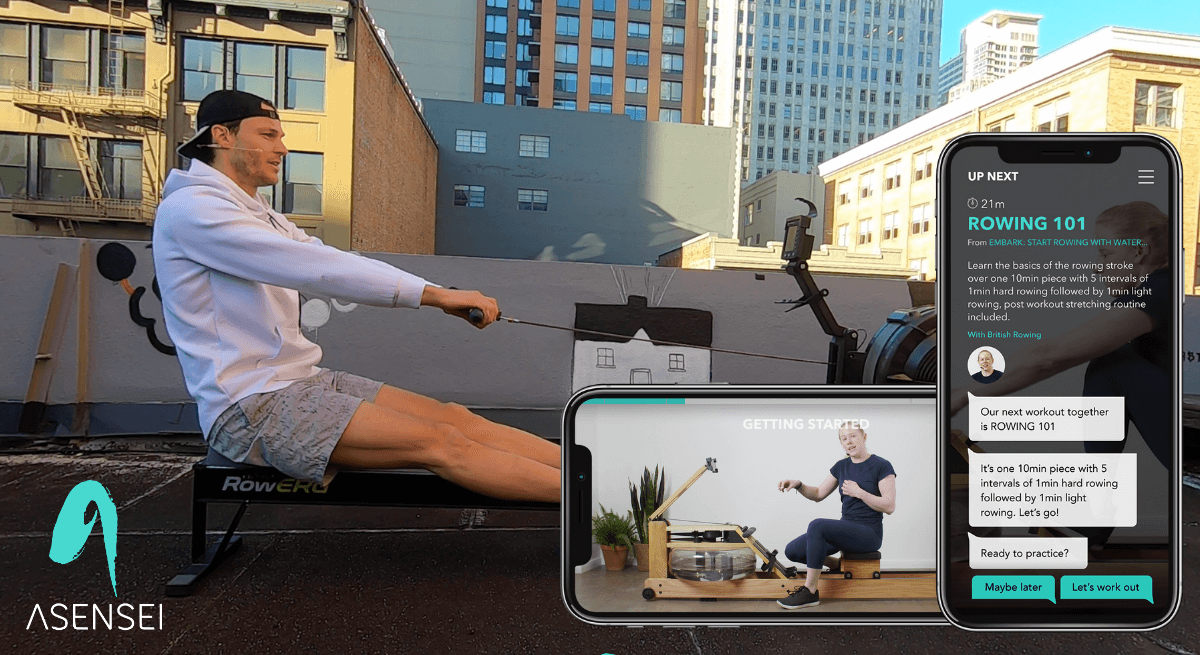
The Concept2 PM5 also has Bluetooth connectivity, allowing you to connect to training apps such as asensei rowing and benefit from expert coaching, guided workouts, personalized targets and performance tracking.
HYROX rowing machine resistance and damper settings
Should you turn the resistance on the HYROX rowing machine all the way up to 10 to go faster?
No!
The damper on a Concept2 rowing machine controls the airflow into the flywheel, changing how heavy or light each stroke feels. Think of it a little like changing gears on a bicycle.
A higher damper setting doesn't automatically mean more power or a faster rowing time.
Under the 2026/27 HYROX Singles rules, rowing machines are preset as follows:
| Machine setting | HYROX default |
|---|---|
| Damper setting | 6 |
| Footplate position | 4 |
You are allowed to adjust these settings, so there's no need to stick with the defaults if you've found something that works better for you during training.
What damper setting does Eric Murray recommend?
Eric recommends experimenting with damper settings between 3 and 6 for regular rowing, depending on your strength, size, technique and preferred stroke rate.
He also recommends using higher and lower damper settings for specific training exercises.
A higher setting can be useful for practicing powerful strokes and maintaining good technique under load, while a very low setting can help you learn to move more quickly.
Understand your drag factor
Did you know that a damper setting of 5 can feel different on two Concept2 rowing machines?
That's where drag factor comes in. It's a measurement of how quickly the flywheel slows down, which allows you to reproduce similar rowing characteristics on different machines.
Eric explains that a drag factor of around 130, which often corresponds to a damper setting of approximately 5, is commonly used in elite rowing training programs.
However, that doesn't mean 130 is the perfect drag factor for every HYROX athlete.
As Eric puts it:
There's no magical number.
It's worth experimenting during training to find the setting that allows you to row most effectively.
Eric's DRAG PLAY workout in the asensei rowing app is specifically designed to help you explore different drag factors and understand their effect on your rowing performance.
Read our guide to Concept2 drag factor and damper settings to learn more.
Race-day tip: Know your preferred footplate position and damper setting before you arrive at your HYROX event. There's no point wasting valuable time figuring out your rowing machine setup during the race.
What is a good HYROX rowing time?
A good HYROX rowing time depends on your fitness, rowing experience, race division and how hard you've been working in the earlier stages of the race.
An analysis of HYROX race results by Hybrid Huddle provides some useful benchmarks.
Typical HYROX rowing times by division
| Division | Median rowing station time |
|---|---|
| Open Men | 4:53 |
| Open Women | 5:31 |
| Pro Men | 4:34 |
| Pro Women | 5:05 |
Source: Hybrid Huddle HYROX rowing statistics, November 2026.
These figures represent the median recorded rowing station times. Approximately half of the athletes in each division completed the station faster than the time shown.
Remember that recorded race station times are not necessarily identical to the 1,000m time displayed on the rowing machine. Getting onto and off the machine and receiving judge confirmation can contribute to your recorded station time.
Also, don't expect to match your standalone 1,000m rowing personal best during a HYROX race. You'll be rowing under very different conditions!
HYROX rowing split times
On the Concept2 rowing machine, your split time tells you how long it would take to row 500m at your current pace.
Here are some example average split times and their equivalent 1,000m rowing times.
| Average 500m split | 1,000m rowing time |
|---|---|
| 1:45 | 3:30 |
| 1:50 | 3:40 |
| 1:55 | 3:50 |
| 2:00 | 4:00 |
| 2:05 | 4:10 |
| 2:10 | 4:20 |
| 2:15 | 4:30 |
| 2:20 | 4:40 |
| 2:30 | 5:00 |
| 2:45 | 5:30 |
| 3:00 | 6:00 |
Rather than choosing a target based entirely on how fast other athletes are rowing, spend some time during training working out what pace you can sustain without compromising your other HYROX exercises.
How hard should you row in HYROX?
One of the most interesting things about indoor rowing is how much extra power is required to make relatively small improvements in your split time.
The faster you go, the harder it becomes to go faster still.
Is it worth rowing five seconds faster?
Using the Concept2 relationship between pace and power, we can calculate how much extra power is required to achieve faster rowing times.
| 500m split | Power output | 1,000m time |
|---|---|---|
| 2:15 | 142 watts | 4:30 |
| 2:10 | 159 watts | 4:20 |
| 2:05 | 179 watts | 4:10 |
| 2:00 | 203 watts | 4:00 |
| 1:55 | 230 watts | 3:50 |
| 1:50 | 263 watts | 3:40 |
| 1:45 | 302 watts | 3:30 |
Source: Concept2 watts calculator.
Imagine that you're comfortably rowing at a 2:00 split during your HYROX race.
Increasing your pace to a 1:55 split requires approximately 14% more power, yet you'll save just 10 seconds over the entire 1,000m rowing distance.
Is that a worthwhile trade-off if it leaves you struggling on the next run?
Power output isn't the same as the energy your body expends, but the figures help illustrate why small improvements in rowing speed can come at a considerable cost.
This is where good rowing technique can make a difference. Learning to generate power more effectively could help you improve your rowing pace without a corresponding increase in physical effort.
Eight HYROX rowing technique tips from an Olympic champion
If you've come to HYROX from a running, CrossFit or strength training background, you may already have a great level of fitness.
But are you making the most of that fitness on the rowing machine?
As asensei coach Eric Murray explains, Good Form is Free Speed.
Drawing on Eric's rowing coaching and his HYROX-specific advice on the ENDUROX podcast, here are eight technique tips to help you improve your rowing performance.
1. Maintain momentum rather than starting again with every stroke
One of the biggest mistakes Eric sees athletes making is failing to understand how the rowing machine works.
Think about riding a bike on a flat road. Once you've accelerated to your desired speed, you're not trying to accelerate from a standstill every time you turn the pedals. You're simply trying to maintain your speed.
The same principle applies to the rowing machine.
Get the flywheel up to speed, establish a rhythm and focus on maintaining its momentum with each stroke.
As Eric explains:
I don't have to go from zero to 100. I've got to go from 90 to 100 on every stroke.
The flywheel continues to spin between strokes. You're adding energy to maintain its speed rather than starting again from zero.
A smooth recovery, an appropriate damper setting and a sustainable stroke rate can all help you develop this rhythm.
Rather than fighting the rowing machine, learn to work with it.
Eric Murray on rowing efficiency in HYROX
In this episode of the ENDUROX podcast, Eric explains the mechanics of the rowing machine and how HYROX athletes can use them to their advantage.
Listen to Eric Murray: How to Row Faster, Best Damper Setting & Olympic Training. The discussion on rowing efficiency begins at 45:52.
2. Use your legs and keep your arms long
Rowing might look like an upper-body exercise, but much of the power in the rowing stroke comes from your legs.
The basic sequence during the drive phase of the rowing stroke is:
Legs – Body – Arms
Push firmly through your feet, then swing your body back from the hips before drawing the handle towards your lower ribs.
Eric encourages athletes to think about hanging off the rowing handle.
Keep your arms long during the initial leg drive, allowing the power generated by your legs and body to transfer through your arms to the handle.
Avoid pulling too early with your arms or trying to generate excessive power with your upper body.
3. Make the most of the recovery
The recovery phase is your opportunity to prepare for the next stroke.
The basic sequence reverses:
Arms – Body – Legs
Extend your arms, pivot your body forward from the hips and then bend your knees to return towards the flywheel.
Aim for a smooth, relaxed movement rather than using unnecessary effort to pull yourself forward or rushing into the next stroke.
Eric emphasizes using the natural mechanics of your body and the rowing machine to develop a continuous, rhythmic movement.
For a more detailed explanation and some useful drills, check out our three-step guide to rowing machine technique.
4. Find the right stroke rate for HYROX
What stroke rate should you aim for during the HYROX 1,000m row?
Eric recommends starting by experimenting around 28–30 strokes per minute.
At a lower stroke rate, you'll need to generate more energy per stroke to maintain the same pace. At a higher stroke rate, you can distribute that work across more strokes.
For example, here's how the mechanical work performed per stroke changes at different stroke rates while maintaining a constant power output of 200 watts.
| Stroke rate | Energy per stroke |
|---|---|
| 20 spm | 600 joules |
| 24 spm | 500 joules |
| 28 spm | 429 joules |
| 30 spm | 400 joules |
| 32 spm | 375 joules |
Of course, moving your body more frequently at higher stroke rates also requires energy. A higher stroke rate isn't automatically more efficient.
The challenge is finding the balance that works for you.
During training, experiment with a variety of stroke rates while maintaining the same split time. Pay attention to your breathing, perceived effort and how comfortably you can maintain good technique.
5. Slow down to speed up
While you might aim to row at 28–30 strokes per minute during HYROX, there's a lot to be gained from training at lower stroke rates.
Try rowing at 20 strokes per minute and gradually increasing the power you generate through your legs.
Can you improve your split time without increasing your stroke rate?
Practicing at lower stroke rates gives you more time to focus on good technique and develop effective movement patterns that you can reproduce when rowing faster.
It's an approach Eric uses extensively in his asensei rowing workouts.
Find out more in Slow Down to Speed Up: Why Training at Low Rates Works.
6. Relax your grip and shoulders
You've still got a farmers carry to complete after the rowing station, so why tire out your grip unnecessarily?
Hold the rowing handle securely, but avoid squeezing it excessively.
Keep your wrists flat, relax your shoulders and avoid unnecessary tension in your arms.
This was a point Eric and Dr. Dan Plews discussed specifically in the context of HYROX. An efficient rowing technique could help you preserve some of that valuable grip strength for the farmers carry.
7. Use the Concept2 force curve to check your technique
Did you know that the Concept2 Performance Monitor can show you how you apply force throughout your rowing stroke?
Select the force curve display on your PM5 monitor while rowing.
Eric recommends looking for a relatively smooth curve. This can help you understand how effectively you're transferring power from your legs through your body to the rowing machine handle.
Keep your arms long during the initial leg drive and try to make the transition from leg drive to body swing smooth and continuous.
Experiment with small changes to your technique and see how they affect the shape of the force curve.
It's a useful way to get additional feedback on your rowing technique during training.
8. Don't sprint the first 200m
You've finally reached the rowing machine and you're keen to make up some time.
Resist the temptation to go all out!
Take a few purposeful strokes to get the flywheel moving, then settle into your planned race pace.
Find a comfortable breathing rhythm and aim for consistent split times across the 1,000m.
If you're feeling good towards the end, you can increase the pace. Just remember what's still to come.
How to train for HYROX rowing
There's more to preparing for the HYROX rowing station than repeatedly rowing 1,000m as fast as you can.
We'd recommend focusing on four areas.
Improve your rowing technique
Use low-rate training and rowing drills to develop good habits.
This is particularly important if you're already fit but relatively inexperienced on the rowing machine.
A little time invested in learning to row properly could deliver significant benefits without increasing your overall training load.
Build rowing endurance
Longer, steady rowing workouts help develop aerobic fitness while giving you time to practice good technique and rhythm.
You don't need to restrict your rowing training to 1,000m just because that's the race distance.
Practice your race pace
Use shorter intervals and repeated 1,000m efforts to develop a feel for the pace you want to maintain during your HYROX race.
Eric recommends having a clear purpose for each rowing session rather than simply getting onto the machine and rowing until you've had enough.
Structured intervals give you specific targets and allow you to compare your performance from one effort to the next.
Practice rowing when you're already tired
A standalone 1,000m row is very different from a HYROX 1,000m row.
Include some sessions where you combine rowing with running, burpees or other functional fitness exercises.
This is often referred to as compromised training.
It will help you understand how your rowing technique and pace change when you're fatigued, and how your rowing effort affects the exercises that follow.
Three HYROX rowing workouts to try
Here are three practical rowing workouts you can incorporate into your existing HYROX training plan.
Remember to warm up before each workout and adjust the intensity and volume to suit your fitness and other training commitments.
Workout 1: Find your most efficient stroke rate
Goal: Explore the relationship between stroke rate, pace and perceived effort.
After warming up, choose a comfortable, sustainable target split.
| Interval | Stroke rate | Duration |
|---|---|---|
| 1 | 22 spm | 3 minutes |
| Recovery | Easy rowing | 2 minutes |
| 2 | 26 spm | 3 minutes |
| Recovery | Easy rowing | 2 minutes |
| 3 | 30 spm | 3 minutes |
Aim to maintain the same average split time across all three intervals.
Finish with 5 minutes of easy rowing.
Which stroke rate felt most comfortable? At which rate was it easiest to maintain your technique? How did your breathing and heart rate compare?
Try repeating the workout on another day, reversing the order of the stroke rates, to help account for the effects of fatigue.
You might be surprised by what you discover.
Workout 2: HYROX race-pace intervals
Goal: Develop a consistent, sustainable rowing pace.
- Warm up for 10 minutes.
- Row 4 x 500m at your proposed HYROX race pace.
- Take 90 seconds of recovery between intervals.
- Aim for a consistent average split across all four intervals.
- Cool down for 5 minutes.
As you become more comfortable, progress to repeated 1,000m efforts with 2–3 minutes of recovery between intervals.
Don't turn every session into a maximum-effort test. You're practicing a pace that you can reproduce during your race.
Workout 3: Run, row, run
Goal: Practice rowing under race-like conditions.
After warming up:
- Run 1km at your intended HYROX running pace.
- Row 1,000m at your intended HYROX rowing pace.
- Run another 1km.
Pay particular attention to how you feel during that second run.
Did you row too hard? Could you maintain your running pace? Did your rowing technique deteriorate as you got tired?
Try the session again on another day with a slightly different rowing pace and compare how you feel and how long the entire sequence takes.
It's a simple way to explore what rowing pace might work best for your overall HYROX performance.
Improve your HYROX rowing with asensei
What if you could learn to row with a double Olympic rowing champion in your local gym or at home?
That's exactly what you can do with the asensei rowing app.
Eric Murray's coaching in asensei covers many of the same principles he discusses on the ENDUROX podcast, including rowing technique, drag factor, power development, stroke rate and pacing.
Connect your iPhone or iPad to a compatible Bluetooth-enabled rowing machine and train with Eric and our other expert rowing coaches.
With guided workouts, personalized performance targets and structured rowing programs, you can make your time on the rowing machine more productive.
Which asensei rowing programs are best for HYROX?
While these programs aren't specifically designed for HYROX, they develop many of the rowing skills you'll need on race day.
ROWING FUNDAMENTALS
Best for: Time-conscious athletes looking to develop basic rowing skills.
If you're already juggling a busy HYROX training schedule, these shorter sessions can help you work on your rowing without committing to lengthy additional workouts.
MASTER THE BASICS – British Rowing
Best for: Athletes who are fit but relatively new to rowing.
Developed with British Rowing, MASTER THE BASICS helps you learn correct rowing technique, build your rowing fitness and become more confident on the rowing machine.
It's a great place to start if you've come to HYROX from another sport and haven't had much formal rowing coaching.
(RE)COMMIT – Eric Murray
Best for: Athletes looking to improve their rowing speed and pacing.
Eric's structured training program is designed to help you achieve your best 2,000m rowing time.
Interestingly for HYROX athletes, the program includes a 1,000m benchmark test in the first week. Your performance is used to help personalize targets in subsequent workouts.
Although you're training towards a 2,000m finale, the improvements in technique, power, pacing and endurance are highly relevant to the HYROX rowing distance.
Find out more about connected rowing coaching with Eric Murray.
RECOMMIT PLUS – Eric Murray
Best for: Athletes wanting to explore rowing performance in more depth.
RECOMMIT PLUS builds on the original (RE)COMMIT program with additional workouts focusing on power, technique, stroke rate, drag factor and endurance.
Many of these workouts address the areas Eric discusses in his HYROX rowing advice.
Five coached asensei workouts to try before your next HYROX
Already following a HYROX training plan? You might prefer to select individual rowing workouts rather than commit to a complete rowing program.
Here are five of Eric Murray's workouts that are particularly relevant.
| Workout | Structure | Training focus |
|---|---|---|
| DRAG PLAY | 5 x 6 minutes | Explore different drag factors and their effect on your rowing |
| PUMP THE POWER | 6 x 4 minutes | Develop effective power at different stroke rates |
| CRANKING CADENCE | 10 x 2 minutes | Increase your stroke rate while maintaining good technique |
| GEAR SHIFTER | 3 x 12 minutes | Learn to control power across different stroke rates |
| CRUISE CONTROL | 2 x 20 minutes | Develop rowing endurance and sustainable pacing |
These workouts are part of the RECOMMIT PLUS training program.
You can explore the workout descriptions and additional sessions in our RECOMMIT PLUS rowing training guide.
Not sure which program is right for you? Try our asensei rowing program finder.
Training for HYROX? Try asensei for a month
You've got a race coming up and want to improve your rowing, but perhaps you're not looking for a long-term rowing subscription.
No problem.
With an asensei monthly rowing membership, you can access our rowing coaches, training programs and workouts without committing to an annual subscription.
Add one or two coached rowing sessions each week to your existing HYROX training plan.
Work on your technique, develop more power per stroke and find a rowing pace that works for you.
And the rowing skills you develop will stay with you long after you've crossed the finish line.
Explore asensei monthly membership
Frequently asked questions about HYROX rowing
How far do you row in HYROX?
The HYROX rowing distance is 1,000m. Rowing is the fifth workout station, following the fifth 1km run. The distance is the same for standard Open and Pro competitors.
How far do you row in HYROX Doubles?
In HYROX Doubles, you and your partner share the 1,000m rowing distance. You don't have to row 1,000m each.
What rowing machine is used in HYROX?
HYROX uses the Concept2 RowErg. Training on the same type of rowing machine will help you become familiar with its performance monitor, damper settings and rowing characteristics.
What is a good HYROX rowing time?
According to published HYROX race statistics, median rowing station times are approximately 4:53 for Open men, 5:31 for Open women, 4:34 for Pro men and 5:05 for Pro women.
Individual targets should take into account your rowing experience, fitness and overall race strategy.
What resistance is the HYROX rowing machine set to?
Under the 2026/27 Singles rules, the Concept2 damper is preset to 6. Athletes can adjust this setting. A higher damper setting doesn't automatically make you row faster.
What is the best damper setting for HYROX rowing?
Olympic rowing champion Eric Murray recommends experimenting with damper settings between 3 and 6. Your ideal setting depends on your strength, size, rowing technique and preferred stroke rate.
What is a good stroke rate for HYROX rowing?
Eric Murray suggests experimenting around 28–30 strokes per minute as a starting point. Your optimal stroke rate will depend on your technique, fitness, strength and target split time.
Should I row as hard as possible in HYROX?
For most athletes, an all-out 1,000m row isn't the best overall race strategy.
Aim for a sustainable rowing pace that allows you to complete the station efficiently while preserving enough energy for the remaining running segments and workout stations.
Can you stop rowing during HYROX?
Yes. Singles competitors may stop rowing and rest while remaining seated. You must complete the required distance and receive judge confirmation before leaving the machine. Check the current HYROX rulebook for your race division.
How often should I row when training for HYROX?
One or two focused rowing sessions per week can be a useful starting point alongside your running and strength training.
If rowing is one of your weaker areas, you might benefit from additional technique practice.
Can I train for HYROX rowing at home?
Yes. If you have access to an indoor rowing machine, you can work on your rowing technique, fitness and pacing at home.
Training on a Concept2 RowErg will also help you become familiar with the equipment used in HYROX.
Can I use asensei to train for HYROX?
Yes. The asensei rowing app offers expert rowing coaching, guided workouts, personalized performance targets and structured training programs.
It's designed to complement your existing HYROX training by helping you improve the rowing component of your race.
Conclusion: Train smarter and row faster in HYROX
Improving your HYROX rowing performance is about more than simply pulling harder on the rowing machine.
Learning to maintain flywheel momentum, developing good rowing technique, experimenting with drag factor and finding an effective stroke rate can all help you become a more efficient rower.
Practice rowing when you're already tired, and pay attention to how your rowing effort affects your performance in the rest of the race.
Remember, the fastest row isn't necessarily the best row for your overall HYROX performance.
With some focused rowing training and a little expert coaching, you can work towards completing your 1,000m more efficiently and arriving at the next stage of your HYROX race ready for action.
Happy rowing, and good luck with your next HYROX race!
Download asensei rowing today
asensei is FREE to download, and with no commitment, you can try a selection of workouts from our world-class rowing coaches.
All you need is an iPhone or iPad and access to a compatible Bluetooth-enabled rowing machine.
Whether you're training for HYROX, looking to improve your rowing technique or simply want to get fitter and faster, we're here to help.
Explore our flexible monthly rowing membership
DISCLAIMER
HYROX is a registered trademark of HYROX World. asensei is not affiliated with, sponsored by or endorsed by HYROX.