
A 6,000-meter row is long enough to test your aerobic fitness, pacing and technique, but short enough that you cannot afford to relax. For many rowers, it takes somewhere between 20 and 30 minutes of sustained effort. So, what counts as a good 6K row time?
Based on Concept2’s 2025-26 RowErg season rankings, the median submitted time was 25:02.0 for men and 28:01.7 for women. A result below those times would place you in the faster half of the rowers included in those rankings.
However, your age, sex, weight, training history, rowing machine and experience all affect what represents a good result for you. Your most useful benchmark is often your previous 6K time—and whether you can improve it with better fitness, pacing and technique.
Table of Contents
- What is a 6K rowing test?
- What is a good 6K row time?
- What is a good 6K row time by age?
- Current 6K rowing records
- What affects your 6K rowing time?
- How does 6K pace compare with 2K pace?
- How to pace a 6K row
- How to train for a faster 6K
- Train for your next 6K with asensei
- Frequently asked questions
- Conclusion
What is a 6K rowing test?
A 6K test is a 6,000-meter effort completed on an indoor rowing machine, usually as quickly as possible.
The distance is used by competitive rowers and rowing programs to assess aerobic capacity and sustained power. World Rowing includes a 6,000-meter piece in its ergometer testing protocol, although some formal tests prescribe a particular stroke rate or drag factor.
Unlike a 500m sprint, a 6K cannot be powered through with strength alone. It rewards rowers who can:
- Sustain an efficient stroke
- Control their opening pace
- Maintain power as fatigue builds
- Judge their effort accurately
- Finish strongly without fading beforehand
Concept2 also recognises 6,000 meters as a ranking distance in its Online Logbook.
What is a good 6K row time?
The table below uses Concept2’s 2026 RowErg rankings. These figures include all ages and weight categories, but exclude adaptive classifications.
Men’s 6K rowing times
| Ranking benchmark | 6K time | Average 500m pace |
|---|---|---|
| 90th percentile | 21:58.0 | 1:49.8 |
| 75th percentile | 23:23.3 | 1:56.9 |
| Median | 25:02.0 | 2:05.1 |
| 25th percentile | 27:15.8 | 2:16.3 |
| Overall average | 25:37.1 | Approximately 2:08.1 |
Women’s 6K rowing times
| Ranking benchmark | 6K time | Average 500m pace |
|---|---|---|
| 90th percentile | 24:40.8 | 2:03.4 |
| 75th percentile | 26:12.3 | 2:11.0 |
| Median | 28:01.7 | 2:20.1 |
| 25th percentile | 30:44.6 | 2:33.7 |
| Overall average | 29:00.6 | Approximately 2:25.1 |
In this context, the 90th-percentile time is faster than approximately 90% of the submitted results in that category.
These figures provide useful context, but they are not a perfect population average. Concept2 rankings contain results that users have chosen to submit, so they may overrepresent experienced or performance-focused rowers. They also combine a wide range of ages and body weights.
For a more relevant comparison, use the filters in the Concept2 rankings to select your age, sex and weight category.
How far behind the world record are you?
By the time Nikolaj Pimenov finishes his world-record 6K, the median ranked man (25:02) is barely two-thirds of the way through, with around 1,670m still to row and the median ranked woman (28:02) still has about 2,130 metres to go, more than a third of the race.
What is a good 6K row time by age?
Age affects 6K performance, but among the committed rowers who submit to the Concept2 rankings, the decline is gradual. The median men’s time slows by around a minute between the 30–39 and 60–69 age groups, and the women’s gap is similar. The bigger steps come between the 19–29 and 30–39 groups, which include many university and club athletes, and again after 70.
The tables below show times from the 2024–25 and 2025–26 Concept2 seasons combined, with each rower counted once at their best time. Use them to see where you sit against rowers of a similar age. Bear in mind that people who submit to the rankings tend to be committed, regular rowers, so the median here is well above that of the average gym-goer.
Men's 6K row times by age
The fastest men’s times come from rowers aged 19–29 and from juniors (13–18), many of whom train in competitive programmes. The median for both groups is just under 23 minutes. From 30 onwards, times slow only gradually: the median is 24:35 for men in their 30s and 25:36 for men in their 60s. That slow but steady decline partly reflects how well aerobic fitness holds up with consistent training, and partly who chooses to submit results (see below). A sub-25-minute 6K puts a man in his 50s ahead of most ranked rowers his age.
| Age | Rowers | Top 10% | Top 25% | Median |
|---|---|---|---|---|
| 13–18 | 177 | 21:01.3 (1:45.1) | 21:47.1 (1:48.9) | 22:46.9 (1:53.9) |
| 19–29 | 253 | 20:32.7 (1:42.7) | 21:21.1 (1:46.7) | 22:55.9 (1:54.6) |
| 30–39 | 719 | 21:48.9 (1:49.0) | 23:04.2 (1:55.3) | 24:35.3 (2:02.9) |
| 40–49 | 1,229 | 22:00.7 (1:50.0) | 23:21.6 (1:56.8) | 24:52.1 (2:04.3) |
| 50–59 | 1,161 | 22:28.8 (1:52.4) | 23:32.2 (1:57.6) | 25:07.2 (2:05.6) |
| 60–69 | 941 | 23:09.0 (1:55.7) | 24:01.4 (2:00.1) | 25:36.3 (2:08.0) |
| 70–79 | 326 | 24:34.4 (2:02.8) | 25:45.4 (2:08.7) | 27:32.7 (2:17.7) |
| 80+ | 70 | 25:41.9 (2:08.4) | 27:57.0 (2:19.7) | 29:52.3 (2:29.3) |
Women's 6K row times by age
The pattern is similar for women. Juniors and women aged 19–29 post the fastest median times, at around 26–27 minutes. Women in their 30s and 40s have almost identical medians, at just over 28 minutes. Medians then rise gradually to about 29 minutes in the 60–69 group, before a larger step after 70. Fewer women submit 6K results to the rankings, so treat the youngest and oldest groups as broad guides rather than precise benchmarks.
| Age | Rowers | Top 10% | Top 25% | Median |
|---|---|---|---|---|
| 13–18 | 52 | 23:21.4 (1:56.7) | 24:33.6 (2:02.8) | 25:56.2 (2:09.6) |
| 19–29 | 76 | 23:30.5 (1:57.5) | 24:30.0 (2:02.5) | 26:40.6 (2:13.3) |
| 30–39 | 169 | 24:04.3 (2:00.3) | 26:03.8 (2:10.3) | 28:04.6 (2:20.3) |
| 40–49 | 270 | 24:53.6 (2:04.4) | 26:11.7 (2:10.9) | 28:01.7 (2:20.1) |
| 50–59 | 232 | 25:16.6 (2:06.3) | 26:58.6 (2:14.8) | 28:42.8 (2:23.5) |
| 60–69 | 212 | 26:18.2 (2:11.5) | 27:27.3 (2:17.2) | 29:18.3 (2:26.5) |
| 70–79 | 57 | 28:17.6 (2:21.4) | 29:29.1 (2:27.4) | 32:10.1 (2:40.8) |
Source: Concept2 6000m RowErg rankings, 2024–25 and 2025–26 seasons combined (each rower’s best time), all weight classes, adaptive categories excluded.
These figures come from results that rowers chose to submit to Concept2’s rankings, so they reflect committed, regular rowers rather than everyone who uses a rowing machine. The effect is likely to be strongest in older age groups: a 65-year-old who ranks a 6K has typically been training for years, so the rankings may make performance look more stable with age than it is across the wider population. Smaller groups — particularly younger and older women — are also less reliable. Treat the tables as a benchmark against other dedicated rowers, not as population averages.
“Head start” comparisons: age-group records vs medians
Age is no excuse in either direction: the 6K record for 12-year-old boys is 23:03.3, faster than the median ranked man of any age from 30 upwards.
Do rowers get faster from one year to the next?
Among rowers who ranked a 6K in both of the two seasons above, most under-30s got faster, typically by around 20 seconds, while rowers in their 50s and 60s broadly held their times. For older rowers, standing still is a win.
Current 6K rowing records
The official 6K world records, maintained by Concept2, show what is possible at the very pinnacle of the sport.
In January 2026, Serbian Olympian Nikolaj Pimenov completed 6,000 meters in 18:04.7, an average pace of approximately 1:30.3 per 500 meters. Concept2 reported that this broke his own world record by more than four seconds.
The women's world record is held by Olena Buryak (UKR), 20:17.7, set in the 2015-16 season, an average split of about 1:41.4 per 500m. Charlotte Buck’s 20:38.9, the fastest women’s 6K of 2026, is the current world record for women aged 30–39.
These performances show what elite rowers can achieve, but your age, physiology and training background matter far more when setting your own goal. For the typical indoor rower the percentile tables above are a more valuable benchmark.
What affects your 6K rowing time?
Aerobic fitness
A 6K is predominantly an aerobic effort. You need to produce power continuously while supplying your working muscles with oxygen.
Longer steady rows, threshold sessions and appropriately paced intervals can all help develop the fitness required to sustain a faster split.
Rowing technique
Small inefficiencies become expensive over 6,000 meters. If your sequence deteriorates or you rush the recovery, you may use more energy without moving the flywheel more effectively.
Focus on:
- Driving with the legs before opening the body
- Keeping the arms relaxed during the first part of the drive
- Maintaining a controlled recovery
- Connecting smoothly at the catch
- Producing consistent, repeatable strokes
Pacing
Starting too quickly is one of the most common 6K mistakes. An ambitious first 1,000 meters can feel manageable, but the cost often appears later in the test.
A slightly conservative opening followed by consistent middle splits usually produces a better result than a fast start followed by a prolonged slowdown.
Stroke rate
There is no universal ideal stroke rate. The right rate is one that allows you to maintain effective power and good technique.
Larger, stronger rowers may be comfortable producing more power at a slightly lower rate. Lighter rowers may perform better by maintaining a higher rate with less power per stroke.
Do not force an artificially low stroke rate if it makes every stroke feel heavy. Equally, increasing the rate will not help if your stroke becomes short or disconnected.
Age, sex and body weight
Physiology affects rowing performance. Absolute power tends to favour larger rowers, while age influences strength, recovery and aerobic capacity.
That is why an all-ages, all-weights table should be used as broad context rather than a judgement of your ability.
The rowing machine and its settings
Compare results completed on equivalent equipment wherever possible. A Concept2 RowErg result should not automatically be compared with a time from a machine using a different resistance or measurement system.
On a Concept2, use drag factor rather than relying solely on the damper lever number. A higher drag factor is not automatically faster; it can make each stroke heavier and accelerate fatigue.
How does 6K pace compare with 2K pace?
Your 6K pace should be slower than your 2K pace because you must sustain it for three times the distance. Pacing calculations can be a hotly debated topic but two useful reference points can help you estimate how much slower.
Paul’s Law
A well-known and long-standing rule of thumb among the indoor rowing community, Paul’s Law suggests that your average 500m split slows by around five seconds each time you double the distance. Since 6K is roughly 1.6 doublings of 2K, that points to a 6K pace about eight seconds per 500 meters slower than your 2K pace.
The elite benchmark
World Rowing has reported that, among the world-class rowers studied by physiologist Kurt Jensen, average 6K power was around 85% of average 2K power. That is a power relationship, not a rule that applies identically to every athlete. Because the power needed rises steeply with speed, 85% of the power translates into a split roughly 5–6% slower.
| 2K split | 6K estimate (Paul’s Law) | 6K estimate (85% of 2K power) |
|---|---|---|
| 1:45 | 1:52.9 | 1:50.8 |
| 2:00 | 2:07.9 | 2:06.7 |
| 2:15 | 2:22.9 | 2:22.5 |
Which should you use?
For many rowers, a 6K pace five to eight seconds per 500 meters slower than their 2K is a sensible starting estimate. Paul’s Law sits at the more conservative end of that range. Rowers with a strong aerobic base, like the elite athletes in Jensen’s study, may be able to hold a pace closer to their 2K. More power-oriented rowers may find even Paul’s Law optimistic.
Treat these figures only as a starting point. The best way to set your target is through training sessions that rehearse the pace, such as the threshold intervals described below.
How to pace a 6K row
A simple approach is to divide the test into three 2,000-meter sections.
First 2,000 meters: control
Start positively, but settle onto your target pace quickly. The effort should feel purposeful rather than desperate.
Avoid chasing a faster average split just because you feel fresh. You should feel as though you are holding something in reserve.
Middle 2,000 meters: commit
This is where consistency matters. Maintain your rhythm, technique and planned split.
Focus on a few simple cues:
- Relax the shoulders and hands
- Connect the legs at the catch
- Breathe consistently
- Keep the recovery controlled
- Check your average pace without reacting to every stroke
Final 2,000 meters: build
If your pacing was appropriate, you should be able to increase the pressure gradually.
Rather than waiting for the final 200 meters, consider building the effort in stages: a controlled increase with 2,000 meters remaining, another push at 1,000 meters, and then a committed finish.
Your exact plan should reflect your experience. A first-time 6K is primarily about establishing a benchmark. An experienced rower can use previous results and training splits to set a more precise target.
How to train for a faster 6K
A balanced training week should develop endurance, sustainable power and familiarity with your target pace.
Useful sessions include:
Steady aerobic rowing
Longer, conversational-pace rows build the aerobic foundation required for a strong 6K. Keep the intensity controlled enough that you can maintain good technique throughout.
Threshold intervals
Long intervals teach you to sustain a demanding pace without the uninterrupted strain of a complete test.
Examples include:
- 3 × 2,000m with controlled recovery
- 4 × 1,500m
- 3 × 8 minutes
- 4 × 6 minutes
Your exact pace and recovery should reflect the objective of the session and your current ability.
Shorter, faster intervals
Shorter repetitions can improve power and make 6K pace feel more controlled.
Examples include:
- 6 × 500m
- 8 × 1 minute
- 5 × 750m
These should complement, not replace, longer aerobic and threshold work.
Race-pace practice
Practise holding your intended 6K split and stroke rate before test day. The goal is to make the pace familiar and to identify whether your target is realistic.
Do not turn every training session into a maximum effort. Improvement comes from combining hard sessions with easier training and adequate recovery.
Follow Eric Murray’s 6K training program
If you would prefer to follow a structured plan, 6,000m world-record holder Eric Murray coaches the 12-week (RE)FOCUS program in the asensei rowing app.
In 2015, New Zealand rowing legend Eric Murray recorded a 6,000m time of 18:16.8 on the Concept2—an average pace of approximately 1:31.4 per 500m, an open world record at the time and still the record for the 30-39 age group at the time of writing. Murray is also a two-time Olympic champion and is now an asensei rowing coach, sharing the training knowledge that helped him succeed both on the water and on the indoor rower.
Eric’s (RE)FOCUS program in the asensei rowing app is designed specifically to help experienced rowers improve their 5K or 6K performance. The intensive 12-week program contains five workouts per week, combining endurance work, threshold sessions, changes in stroke rate and higher-intensity training. Your targets are personalised to your rowing ability, so you do not need to be chasing a world-record time to benefit from Eric’s approach.
The program builds towards a final 6,000m test called “Waikato”, named after New Zealand’s longest river, home to the country’s famous rowing venue, Lake Karapiro. It is best suited to intermediate and advanced rowers who already have a reasonable fitness base and want structured preparation for their next 6K attempt.
How did rowers perform in the WAIKATO 6K test?
An internal analysis examined 153 completed WAIKATO sessions recorded in the asensei rowing app.
Of those sessions, 149—approximately 97%—were completed faster than the personalised time predicted by the asensei rowing app. This time is predicted based on the athlete's performance near the start of the program which suggests significant improvement after following the training program.
- The average finishing time was 25:37—1 minute 15 seconds faster than the average predicted time of 26:52.
- The median finishing time was 24:59, compared with a median predicted time of 26:12.
- The fastest recorded finishing time in the analysed sessions was 21:20.
The histogram below shows the difference between each rower’s actual and predicted time. A negative result means the rower finished faster than their target. Most results are concentrated below zero, with many rowers finishing approximately 30 to 120 seconds ahead of their predicted time.
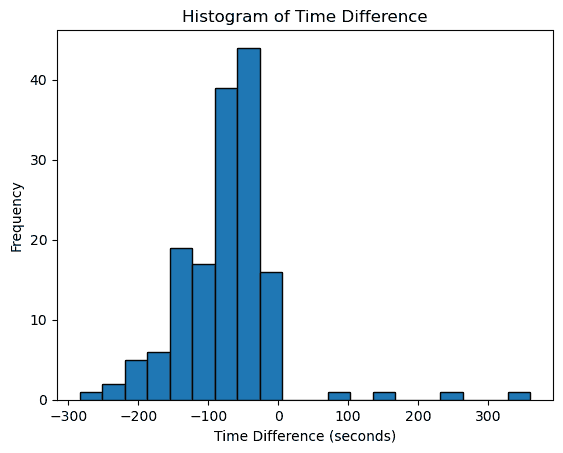 WAIKATO 6km row times in asensei rowing app
These results do not constitute a controlled scientific study: they only include people who completed the final workout, and the comparison is against asensei’s predicted target rather than a separate control group. Nevertheless, they suggest that most rowers who reached WAIKATO were able to meet or outperform the personalised target set for them and indicate a significant improvement in rowing fitness when following the program.
Train for your next 6K with asensei
If you already have a reasonable fitness base and want structured preparation for your next 6K attempt, (RE)FOCUS gives you a complete training progression with personalised targets and coaching from someone who has performed the distance at world-record pace.
Train for your best 6K with Eric Murray
Frequently asked questions
Is a 30-minute 6K row good?
Completing 6,000 meters in 30 minutes requires an average pace of 2:30 per 500 meters. In the 2026 Concept2 rankings, that was slower than the women’s median but faster than the women’s 25th-percentile benchmark. It was slower than the equivalent men’s benchmarks.
For a newer rower, however, completing the distance continuously in 30 minutes can be a useful first benchmark. Your next goal might be to maintain more consistent splits or improve the time gradually.
What pace is a 25-minute 6K?
A 25-minute 6K requires an average pace of 2:05 per 500 meters. That is close to the median men’s result in the 2026 Concept2 rankings and considerably faster than the median women’s result.
What pace is a 24-minute 6K?
A 24-minute 6K requires an average split of exactly 2:00 per 500 meters.
How many strokes does a 6K take?
The total depends on your stroke rate and completion time. A 25-minute row at 26 strokes per minute would involve approximately 650 strokes. Stroke count alone does not indicate efficiency because power, stroke length and recovery control also matter.
Should I row a 6K at a low stroke rate?
Not necessarily. Some formal testing protocols prescribe a stroke rate, but an unrestricted 6K test should use a rate that lets you sustain power and technique. An artificially low rate can make each stroke too heavy, while an excessive rate can reduce stroke quality.
How often should I test my 6K?
Testing every six to eight weeks is usually enough to measure progress without repeatedly interrupting training. Test under similar conditions each time, including the same machine type, drag factor, warm-up and general state of recovery.
Conclusion
A good 6K time depends on the rower. Current Concept2 rankings provide useful context, but age, sex, body weight, experience and training history all influence the result.
Use the rankings to understand the broad performance range, then concentrate on your own progression. Start with a realistic pace, maintain efficient technique and treat your first test as a benchmark. A controlled, repeatable improvement is more useful than comparing yourself with an elite record.
Ready to set your benchmark and beat it? Start training with asensei: coached programmes, personalised targets, and Eric Murray’s 6K plan included.